Metal Fabrication

Comprehensive Metal Fabrication Solutions Tailored to Fulfill Your Manufacturing Requirements

Each project carries its own distinctive traits and challenges. Our proficiency in a broad spectrum of fabrication processes stands as a key asset, enriching your path to success with invaluable capabilities.

As a certified ISO 9001 manufacturing solution provider, we collaborate with top-performing factories and workshops to deliver exceptional fabrication services, encompassing the following processes

Metal Bending

All kinds of shapes and angles are achievable through precise metal bending processes. Our adept production team employs an array of cutting-edge bending machines, including press brake machines, panel benders, metal folders, rotary draw benders, roll benders, CNC bending machines, and a range of specialized equipment. These tools enable us to consistently deliver high-quality metalwork for our projects.

Metal Cutting

All kinds of shapes and angles can be made with proper metal bending processes. Our highly skilled production crew uses a variety of bending machines, including press brake machines, panel benders, metal folders, rotary draw benders, roll benders, CNC bending machines, and much other specialized equipment to produce quality metalwork for our projects.

For most projects, the first step in fabricating a part is cutting the material to size. We use the following cutting methods in our projects to produce the best results possible:

•  Mechanical Cutting
Mechanical cutting refers to the use of power tools and machines to shape and form a workpiece. Common mechanical cutting machines include lathes, milling machines, and drill presses. Many workshops now use automated CNC machines for higher efficiency and precision. 

•  Laser Cutting
Laser cutting uses a focused, high-energy laser beam to vaporize a small portion of the material and create the desired shape or pattern on a workpiece. This non-contact, thermal-based process is capable of making high-quality intricate cuts with narrow kerfs. It can be used on a wide range of materials including plastic, aluminum, plain steel, and stainless steel. It is often used on sheet metal to make high-precision parts with a clean finish.

•  Plasma Cutting
Plasma cutting is a cutting method that relies on superheated, electrically ionized gas (plasma) to melt through the metal workpiece. It is typically used on conductive metals, including steel, aluminum, brass, and copper. This method generally uses less energy than laser cutting and can cut through thicker materials.

• Water Jet Cutting
Water jet cutting uses a high-pressure water jet combined with an abrasive substance to cut through the workpiece. This method operates under low temperatures and can produce parts with a clean sharp edges. It is the go-to method when dealing with materials that are sensitive to heat. Water jets can cut through up to 120mm thick aluminium sheets. A wide range of materials such as aluminum, copper, brass, steel, and many high-strength alloys can be shaped with this method.

•  Wire EDM
The Wire EDM method uses a thin, electrically energized wire to vaporize and slice through electrically conductive metal. This method can make complex, three-dimensional cuts with extreme precision, which makes it ideal for cutting small, highly detailed parts that are difficult to produce with conventional processes.

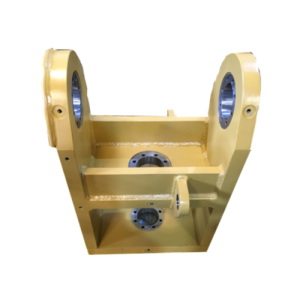
Metal Stamping

Metal stamping, or pressing, is the method of shaping sheet metal using a stamping press. The material undergoes shaping, bending, or cutting based on the tools and dies employed by the stamping machine. Stamping encompasses a diverse array of forming techniques, such as punching, bending, blanking, embossing, flanging, and coining.

Metal Punching

Punching stands as a formative technique employing a punch press to exert pressure on a tool, known as a punch, thereby shearing the metal and crafting holes or cut-outs on the workpiece. Renowned for its efficiency and cost-effectiveness, this method excels in medium to high production runs. The implementation of CNC Turret Punching proves instrumental in curbing labor costs and eradicating human errors. Various alloys, including aluminum, brass, steel, among others, find their versatile applications in the precision forming capabilities of punching machines.

Deep Drawing

Deep drawing represents a specialized form of the stamping process. It involves the compression of a sheet metal workpiece into a die to shape a component where the depth surpasses its diameter. Through a series of dies, the workpiece undergoes redraws, progressively shaping the desired part. This technique is applicable to materials like aluminum, brass, and certain softer steels, making it a preferred method for crafting kitchenware, home appliances, as well as components for the automotive and aircraft industries.

Welding

Welding stands as the pivotal fabrication process that unites materials through intense heat. Our approach encompasses various welding methods tailored to the material type and product design:

TIG Welding: Tungsten Inert Gas (TIG) Welding, also known as Gas Tungsten Arc Welding (GTAW), utilizes a non-consumable tungsten electrode and inert shielding gas. This technique ensures precise control, yielding high-quality welds.

MIG Welding: Metal Inert Gas (MIG) Welding, or Gas Metal Arc Welding, creates an electric arc between a consumable MIG wire electrode and the workpiece, facilitated by a shielding gas. Recognized for its speed, MIG welding outpaces methods like TIG welding.

Robot Welding: Automation through robotics enhances MIG welding productivity while eliminating human error. Although not suitable for very thin or uneven workpieces, robot welding offers long-term benefits.

Friction Stir Welding (FSW): Utilizing friction-generated heat, FSW joins workpieces without the need for shielding gas or filler metal. Commonly applied in aluminum fabrication, this method forms a new homogeneous structure.

Resistance Spot Welding (RSW): RSW welds metal sheets without filler material, applying pressure and electric current-induced heat. While easily automated with minimal deformation, it is unsuitable for tee, butt, and edge joints.

Forging

Forging is a precision manufacturing technique wherein a metal workpiece undergoes shaping through localized compressive forces, typically applied by a hammer or a die. While the traditional image involves a blacksmith skillfully shaping red-hot metal with a hammer—a method still practiced by some craftsmen—modern industrial settings often utilize power hammers or press machines. The resulting forged parts consistently exhibit superior strength compared to their cast or machined counterparts, rendering them optimal for critical applications that demand exceptional strength and reliability

Extrusion

Extrusion is a manufacturing process that involves pushing materials through a die to create components with a defined cross-sectional profile, similar to squeezing toothpaste from a tube. While aluminum is the predominant material, valued for its malleability and cost-effectiveness, a variety of alloys, including magnesium, copper, and stainless steel, can also be utilized. This highly efficient process is easily scalable for high-volume production. It accommodates the production of diverse components such as rods, frames, rails, pipes, tubes, wires, heat sinks, and numerous other parts.

Kohinoor offers an extensive array of fabrication solutions, encompassing various highly specialized processes beyond the scope of this list. For comprehensive details, please reach out to our Sales Department. Explore additional pages to delve deeper into our capabilities in metal casting and other intricate processes.
Scroll to Top